

Celebrity living rooms in India often feel calm because they use neutral and earth-toned colours, plenty of natural light, thoughtful furniture spacing, and limited decor. These choices reduce visual clutter, ease mental load, and create a sense of order.
Design psychology shows that muted tones lower stress, natural light regulates mood, and clear layouts help the brain process space easily.
Many Indian homes can follow the same rules with simple changes like light paint, better window use, and fewer items on display.
Introduction
The living room is where family gathers, guests sit, and you unwind after a long day. It sets the mood for the whole house.
When it feels chaotic, the day feels heavier. When calm, everything seems easier. Celebrity homes draw attention not just for money, but for how they turn busy lives into peaceful spaces.
Indian stars like Anushka Sharma and Virat Kohli live in Mumbai flats with high pressure, yet their rooms look restful. The key is not big budgets, but smart choices anyone can learn.
In Indian homes—small apartments in cities, rented places with restrictions, or joint family houses with many people—these ideas help create calm without major work.
You gain tools to make your space feel ordered and welcoming, using everyday fixes.
What “Calm” Really Means in a Living Room
Calm in a living room does not mean empty or bare walls. It means visual order where the eye rests easily, comfort that invites sitting, and predictability so nothing jars the mind.
Think of a room where you can breathe deeply without scanning for mess.
A common misconception is that calm equals minimalism only—few items, all white. But calm can include warm wood or soft patterns if they follow order.
For example, a few meaningful pieces placed thoughtfully feel peaceful, while many small items feel busy even if neat.
The Psychology Behind Calm Living Rooms
Visual clutter raises mental load. When too many things fight for attention, the brain works harder, leading to stress or tiredness. Studies show cluttered spaces increase cortisol, the stress hormone.
Natural light helps mood regulation. Sunlight boosts serotonin, the feel-good chemical, and helps the body clock. Rooms with good daylight feel fresher and more alive.
Symmetry and spacing guide eye movement smoothly. The brain likes patterns it can predict—balanced furniture reduces confusion.
Fewer focal points let the mind relax. One strong art piece draws gentle interest, while many compete and tire the eyes. In busy Indian homes, this means less noise for better focus and rest.
Core Design Principles Seen in Celebrity Living Rooms
Neutral and Earth-Toned Colour Palettes
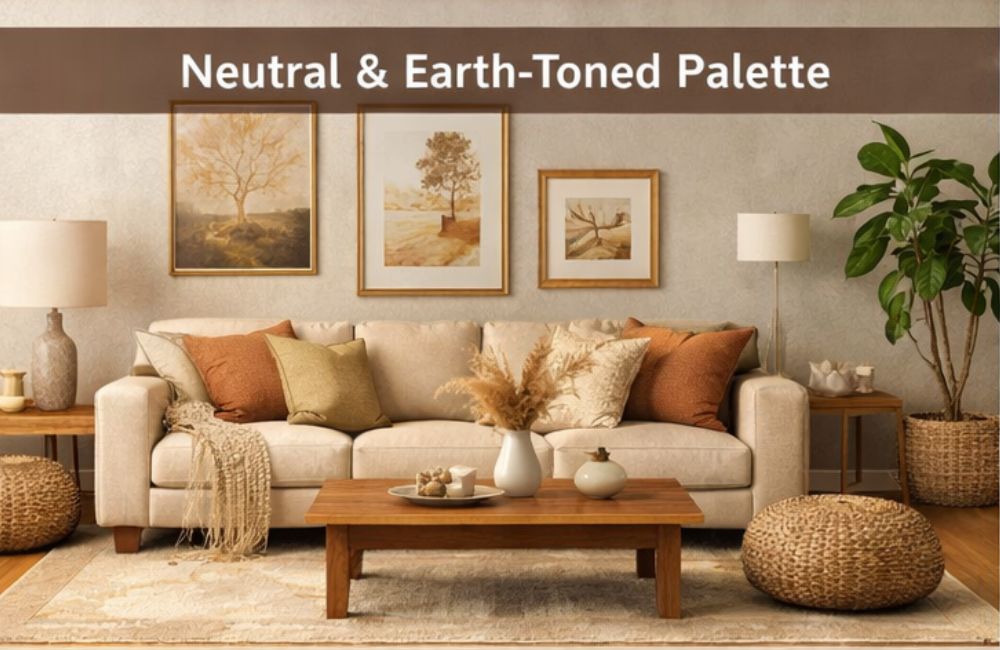
Neutral and earth-toned colour palettes form the foundation of calm in many celebrity living rooms because they create a gentle, non-demanding backdrop that lets the mind rest.
These shades—beige, soft grey, warm taupe, creamy off-white, and subtle browns—mimic natural elements like sand, stone, and wood, which the brain associates with safety and stability.
In design psychology, muted tones reduce visual stimulation and lower arousal levels, helping people feel more relaxed after stressful days.
Bright or highly saturated colours (like vivid reds or electric blues) can energize quickly but also fatigue the eyes faster, leading to restlessness.
By contrast, neutrals promote longer periods of calm without emotional spikes.
In India’s diverse climates, these palettes offer practical benefits too. In hot and humid cities like Mumbai or Kolkata, lighter neutrals reflect heat and sunlight, keeping rooms cooler naturally.
They also hide minor imperfections—dust, small stains, or monsoon dampness—better than glossy or dark paints.
Celebs often control contrast carefully: a slightly deeper wooden accent table or a textured cushion in a similar tone adds subtle interest without creating visual chaos.
This layered approach gives depth while maintaining harmony.
Aditi Rao Hydari and Siddharth exemplify this in their Mumbai and Hyderabad homes, where heritage elements blend seamlessly with calm earth tones.
They use wooden furniture with classical lines, ethnic prints, and light walls to create a serene, gallery-like atmosphere.
The palette supports multi-generational living—neutrals reduce colour clashes that can spark family disagreements and make compact urban spaces feel larger and airier.
For everyday application, start with affordable local brands like Asian Paints or Nerolac in shades such as “Ivory Mist,” “Warm Taupe,” or “Driftwood Grey.”
Test small patches on walls under morning, afternoon, and evening light to observe shifts.
Pair with natural teak or sheesham furniture from neighbourhood markets for warmth. In winter, layer soft throws; in summer, keep it minimal for breathability.
This timeless choice means your living room stays fresh without frequent repaints, proving that calm colour choices are both emotionally soothing and budget-smart.
Natural Light as a Design Element
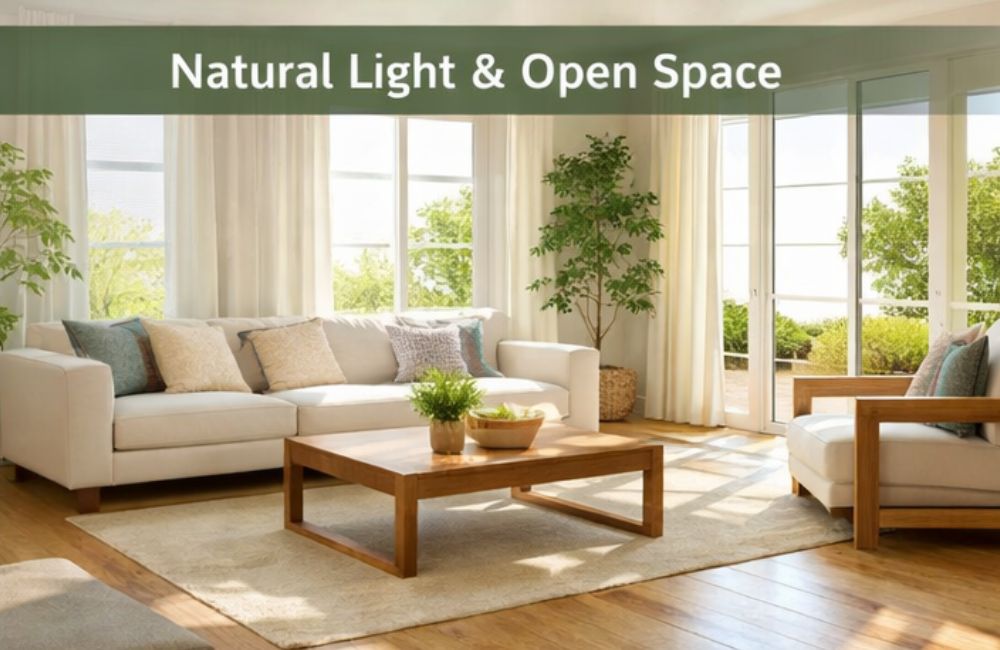
Natural light stands out as one of the most powerful tools for creating calm because it directly influences mood, energy, and even sleep patterns.
Sunlight boosts serotonin production (the feel-good hormone) and helps regulate the body’s circadian rhythm, making rooms feel fresher and more alive.
In contrast, relying only on artificial lighting—especially harsh fluorescents—can increase stress and eye strain.
Celebrity homes prioritize large windows, strategic placement, sheer curtains, and reflective surfaces to pull daylight deep into the space, reducing shadows and creating an open, welcoming feel.
In Indian contexts, this idea addresses common challenges like small windows in older buildings or limited natural light during monsoons.
Sheer cotton or voile curtains (easily available from local tailors) diffuse strong afternoon sun while preserving privacy.
Mirrors placed opposite windows double the light effect, making tight spaces feel expansive.
Evening balance comes from warm LED bulbs (2700K–3000K) that mimic sunset, avoiding cold white lights that disrupt calm.
Anushka Sharma and Virat Kohli’s Mumbai apartment demonstrates this masterfully with floor-to-ceiling windows and light-reflecting tones that flood the room even in a high-rise setting.
Their Alibaug villa extends this with double-height areas and neutral materials, allowing light to dance across textures for a grounded yet airy elegance.
This aligns beautifully with Vastu Shastra preferences for north or east-facing openings to invite positive energy.
To adapt at home, track sunlight patterns for a day—note where it enters strongest—and position seating to benefit.
Add indoor plants like snake plants near windows for biophilic calm without blocking rays.
In rented flats, use portable full-length mirrors or light-coloured blinds. During grey monsoon days, sheer fabrics soften the dimness.
The result is lower visual fatigue (especially from screens) and a shared brightness that benefits joint families, turning ordinary rooms into peaceful retreats.
Intentional Furniture Placement
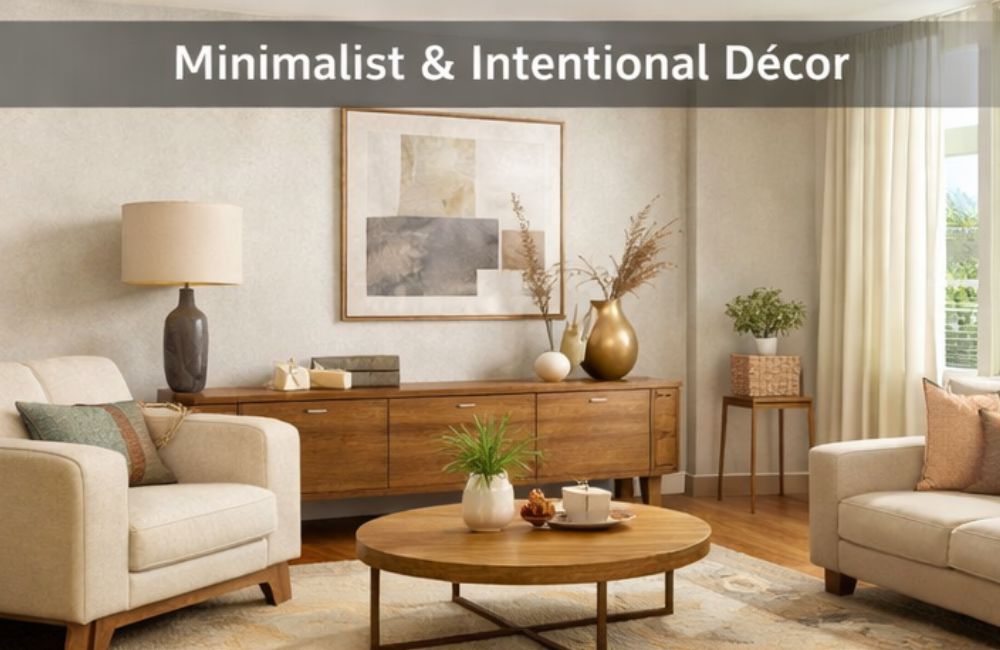
Intentional furniture placement is what turns a room from functional to truly restful, as it creates clear pathways, balanced symmetry, and open flow that the brain reads as safe and predictable.
Crowded or randomly arranged furniture blocks movement, raises subconscious tension, and makes cleaning harder—common issues in busy Indian households.
By using fewer pieces with generous spacing, rooms feel larger and more inviting, guiding the eye smoothly without jarring stops.
Low seating (modern takes on charpoys or low sofas) feels grounded and culturally familiar, encouraging relaxed postures for family conversations or quiet evenings.
Clear walkways (at least 60–90 cm) prevent accidents, especially important with children or elderly members.
Symmetry—such as balanced seating around a central table—reduces cognitive load, much like balanced temple layouts that feel inherently peaceful.
Alaya F’s Mumbai home showcases this with a U-shaped couch scaled perfectly to the room, creating cosy zones for chats or content creation while keeping the centre open.
Neutral fabrics, woven rugs, and cane accents ensure versatility without crowding.
This functional flow suits multi-purpose Indian living areas where the same space hosts TV time, guests, and homework.
Start by measuring your room and sketching a simple floor plan—leave the centre free for easy movement.
In small flats, push the sofa against the longest wall and use lightweight cane chairs for flexibility.
Follow Vastu basics: face main seating east or north. In joint families, define zones with rugs instead of walls.
Celebs achieve this by prioritizing multi-use pieces (ottomans as seats/tables), proving placement is about thoughtful intention, not perfection.
The payoff is effortless daily use and a room that feels calm from the moment you enter.
Controlled Decor and Art Curation
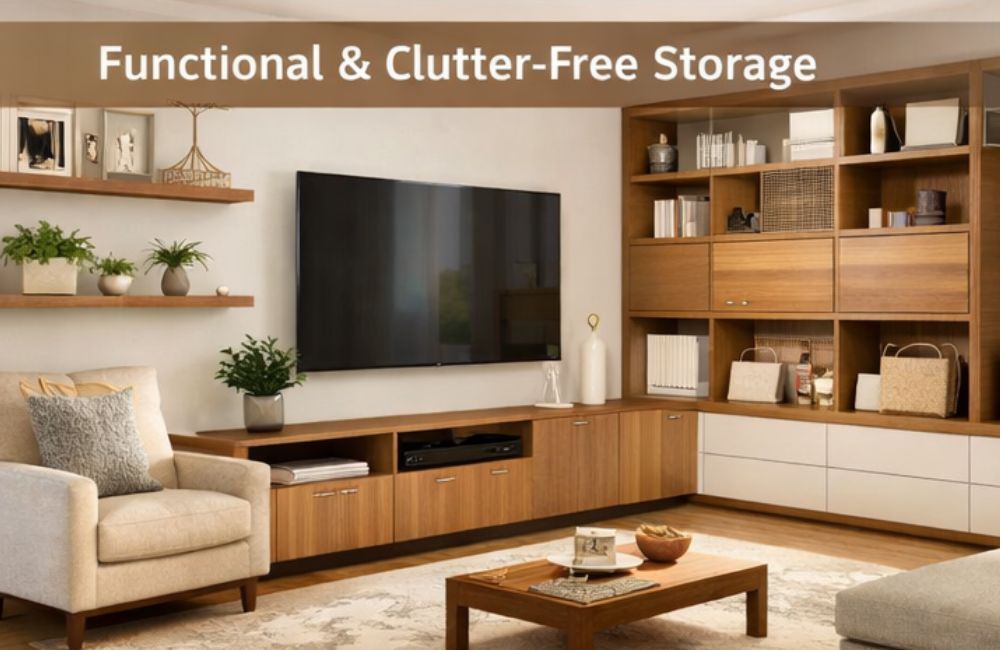
Controlled decor and art curation means choosing quality over quantity—one strong statement piece over scattered small items—to add personality without overwhelming the senses.
Too many objects create visual noise that taxes attention and raises mental load; a single meaningful item draws gentle focus and tells a personal story.
Emotional resonance matters more than filling empty space—decor should evoke memories or values rather than just aesthetics.
In celebrity homes, restraint creates depth: a large painting, sculpture, or heirloom stands alone, allowing it to breathe.
Sonam Kapoor Ahuja masters this in her Mumbai home with thoughtfully placed Indian craftsmanship—antique benches, Jamawar shawls, and glass paintings—blended into neutrals for a curated, not cluttered, look.
Kusha Kapila’s warm minimalism uses subtle cultural touches with hidden storage to maintain peace in her Gurugram space.
For Indian homes, curate around meaning: one pichhwai artwork, a brass lamp from travels, or a family photo in a simple frame.
Limit surfaces to 3–5 key items. Use vertical space—wall shelves—for selective display in small rooms. In joint families, set a “one focal per zone” rule to avoid mix-ups.
Source affordably from FabIndia, Dilli Haat, or local artisans for ethnic prints and ceramics. Declutter seasonally: keep only what sparks joy or has a story.
This approach celebrates culture while preserving calm, making rooms feel lived-in yet serene..
Furniture Choices That Create Quiet Comfort
- Low-profile seating like sofas close to the floor feels grounded and less imposing.
- Soft edges and rounded shapes reduce sharp lines that can feel aggressive.
- Textures that absorb visual noise—linen, cotton, wool, or matte wood—feel soothing to touch and eye.
- Neutral fabrics avoid bold patterns that demand attention.
- Multi-use pieces like ottomans with storage add function without extra items.
These choices appear in many celebrity homes, where comfort supports long family talks or quiet evenings.
Storage and Utility Choices That Reduce Visual Stress
Hidden storage keeps surfaces clear. Built-in cabinets, under-sofa boxes, or wall units hide remotes, books, and daily items.
Wall-mounted shelves or units save floor space and lift eyes upward, making rooms feel taller.
Multi-purpose furniture—like coffee tables with drawers—serves needs without adding pieces.
“Out of sight” matters because unseen clutter frees mental energy. In Indian homes with limited space, this prevents overwhelm from daily use.
What Celebrity Living Rooms Avoid
- Over decorating with too many cushions, vases, or frames that crowd surfaces.
- Loud colour clashes like bright red walls with neon accents that spike energy.
- Too many materials in one space—mixing shiny metal, glossy plastic, rough stone chaotically.
- Random furniture placement that blocks flow or creates dead corners.
- Excess gadgets on display—visible wires, remotes, chargers add visual stress.
Avoiding these keeps the calm intact, even in busy family settings.
How Any Indian Living Room Can Copy This (Realistic Guide)
Getting inspired by celebrity calm doesn’t require expensive renovations or huge spaces—it’s about applying the same principles smartly to your reality.
Indian homes vary widely, from tiny urban flats to rented apartments with landlord restrictions to bustling joint family houses.
The good news is that small, low-cost, or no-permanent changes can deliver big improvements in peace and order.
Start by observing your current space: note what causes stress (clutter, poor light, blocked paths) and tackle one area at a time.
Test changes for a week—paint a wall, clear a surface, rearrange seating—and adjust based on how the room feels. These adaptations respect budgets, cultural needs (hospitality, festivals), and practical life.
For Small Apartments (common in Mumbai or Kolkata flats):
Space is tight, so prioritize openness and light reflection. Paint walls in light neutrals to bounce daylight and make rooms feel bigger.
Use sheer curtains to maximize window light without losing privacy.
Choose one low sofa and a compact table; position against the wall to free the centre for movement.
Add a large mirror opposite the window to double light and depth. Low-cost ideas include plain cotton covers for old furniture and local jute rugs for texture.
Start small: declutter one shelf or table, then add a single meaningful decor piece like a potted money plant.
For Small Apartments (common in Mumbai or Kolkata flats):
- Paint walls in light neutral shades like off-white or soft grey to reflect light.
- Use sheer curtains to maximise window light without privacy loss.
- Choose one low sofa and a small table; place against wall for open centre.
- Add mirrors opposite windows to double light.
- Low-cost: Buy plain cotton covers for old furniture; use local jute rugs for texture.
For Rented Homes (no major changes allowed):
Focus on movable and non-permanent solutions to keep your landlord happy. Stick to neutral throw pillows, blankets, and a single large plant or artwork for personality.
Use command hooks or slim floating shelves (easy to remove) for hidden storage of remotes and books.
Layer lighting with affordable floor lamps in warm tones instead of overhead lights. Declutter surfaces weekly to maintain order—store extras in under-sofa boxes or baskets.
Step-by-step: begin by clearing one coffee table, add a mirror or light rug, then introduce soft cushions in earth tones.
For Rented Homes (no major changes allowed):
- Stick to movable items—add neutral throw pillows and a single large plant.
- Use wall hooks or slim shelves for storage without drilling much.
- Layer lighting with floor lamps in warm tones.
- Declutter surfaces weekly to maintain order.
- Step-by-step: Start with clearing one table, then add one meaningful decor piece.
For Joint Family Homes (many people, more use):
With multiple generations and constant activity, zoning and durability are key to shared calm.
Define areas with rugs or low dividers (TV corner vs. conversation zone) without walls. Choose easy-clean, stain-resistant fabrics in neutral shades.
Use multi-purpose furniture like storage benches for extra seating during festivals.
Set simple family rules: “no clutter on surfaces” and “return items to place.” Low-effort changes include rotating decor seasonally (lighter cushions in summer) and hiding extras in boxes.
This creates peaceful pockets amid daily chaos, making the room welcoming for everyone.
For Joint Family Homes (many people, more use):
- Define zones with rugs or low dividers for shared calm.
- Opt for durable, easy-clean fabrics in earth tones.
- Use multi-purpose like storage benches for extra seating.
- Agree on “no clutter” rule for common areas.
- Low-effort: Rotate decor seasonally; hide extras in boxes under sofas.
Start with one change—like decluttering or adding a mirror—test for a week, then build.
Observational Insight from Indian Celebrity Homes
Across homes of stars like Anushka-Virat, Sonam, Alaya, Kusha, and Aditi-Siddharth, calm comes from intention, not accident.
They plan space discipline—every item has purpose and place. Budget helps, but the real driver is restraint: saying no to extra things.
In crowded Indian cities, this discipline turns limited space into peaceful retreats. The pattern shows calm is repeatable when you prioritise order over show.
Quick Summary
| Design Element | Impact on Calm |
|---|---|
| Neutral/Earth Tones | Lowers stress, relaxes nervous system |
| Natural Light | Boosts mood, regulates body clock |
| Intentional Placement | Eases eye movement, creates flow |
| Controlled Decor | Reduces visual noise, adds meaning |
| Low-Profile Furniture | Feels grounded, invites rest |
| Hidden Storage | Clears surfaces, frees mental energy |
| Soft Textures | Absorbs noise, adds quiet comfort |
Conclusion
Calm in a living room is a design choice built on simple rules—light, order, restraint, and intention. Celebrity homes in India prove these work in real life, from Mumbai flats to family spaces.
You do not need fame or fortune; start with mindful steps like better light use or fewer items. Each small change builds a home that supports rest and connection.
Over time, your living room can become the calm centre you need every day. Take one idea today and see how it feels.